The best budget espresso machines, priced honestly
A cheap espresso machine is only cheap if you already own a grinder that can grind for espresso. This guide compares budget machines on what you actually spend on day one.
Updated 9 Nov 2026. Based on published specs and named reviews (linked below) — how we rate. Prices change; recheck before you buy.
The short answer
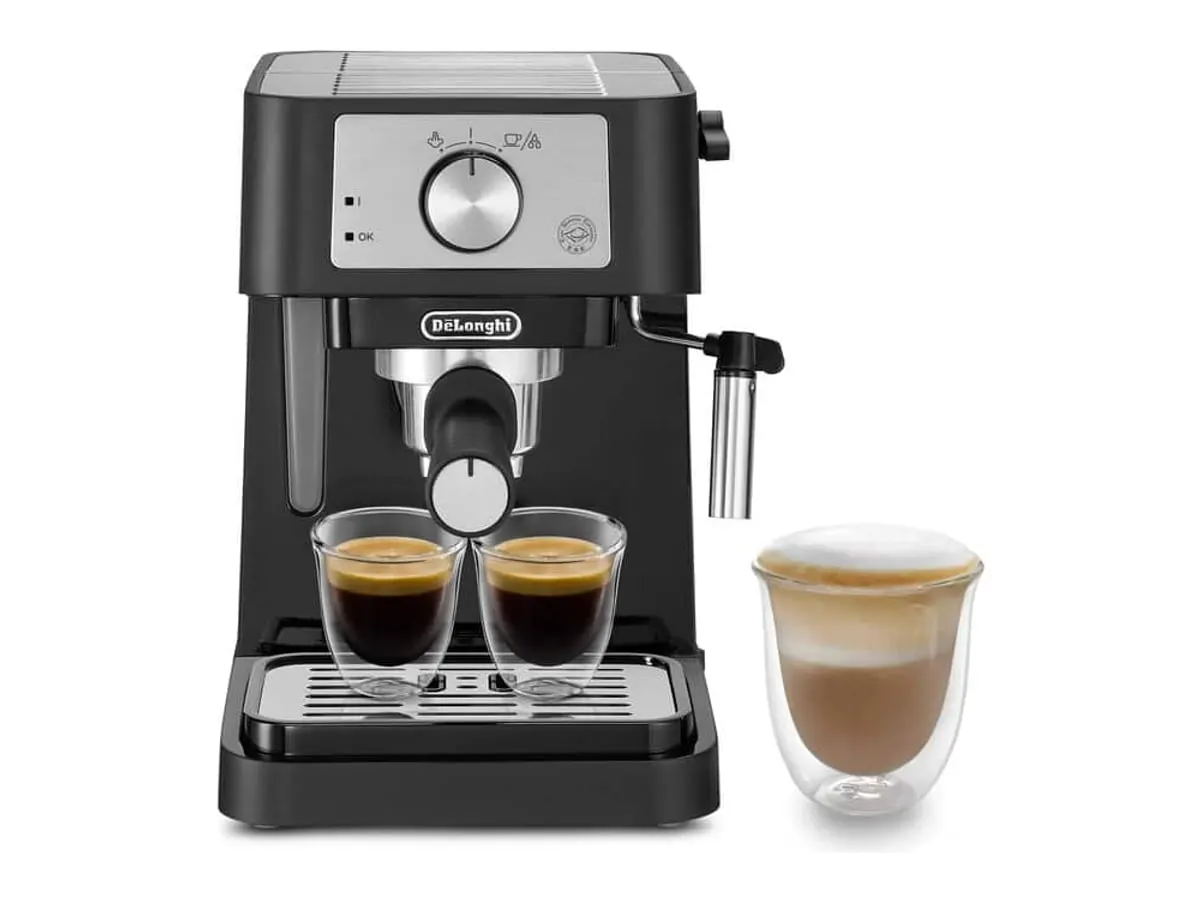
Just curious, under $200:De'Longhi Stilosa — passable espresso, simple, and the cheapest machine Serious Eats recommends.
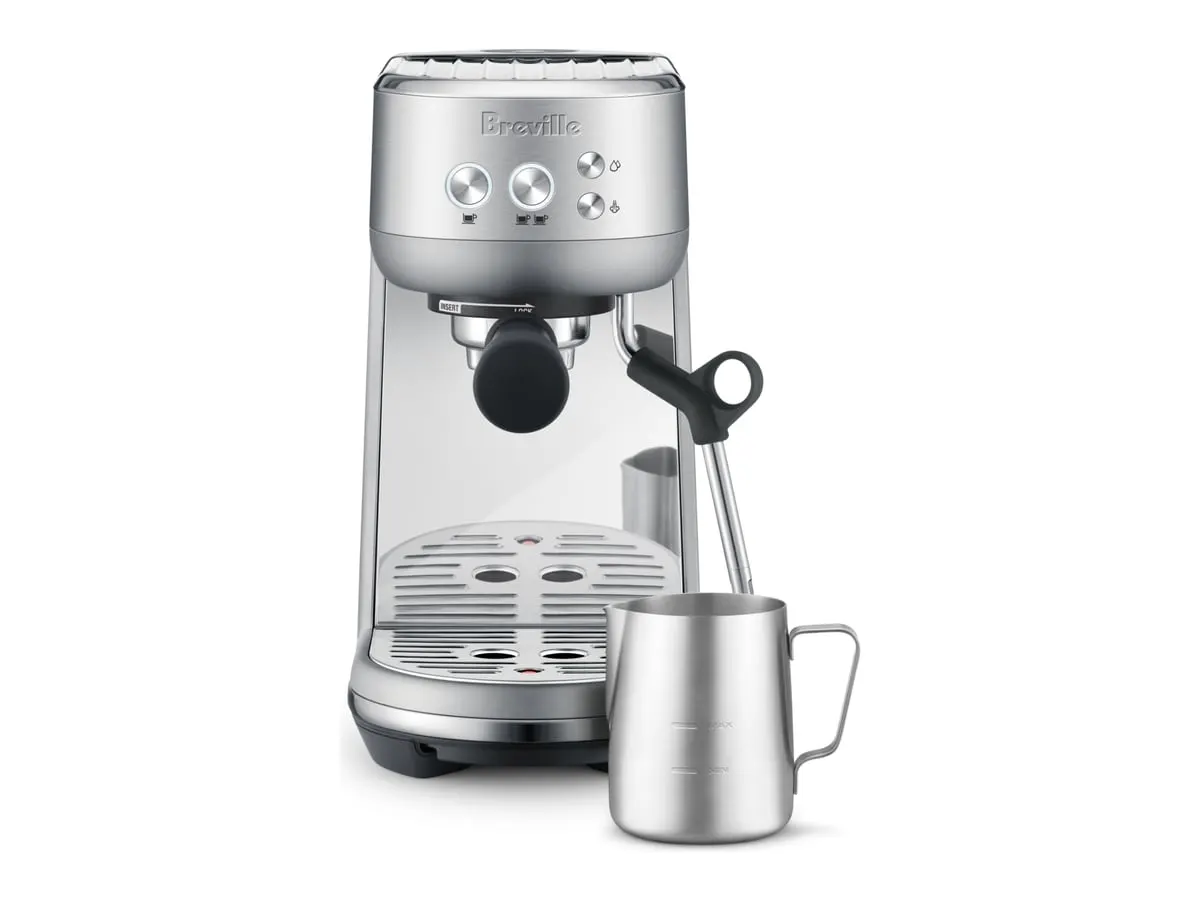
Want good espresso for the least money and will buy a grinder:Breville Bambino plus an espresso grinder.
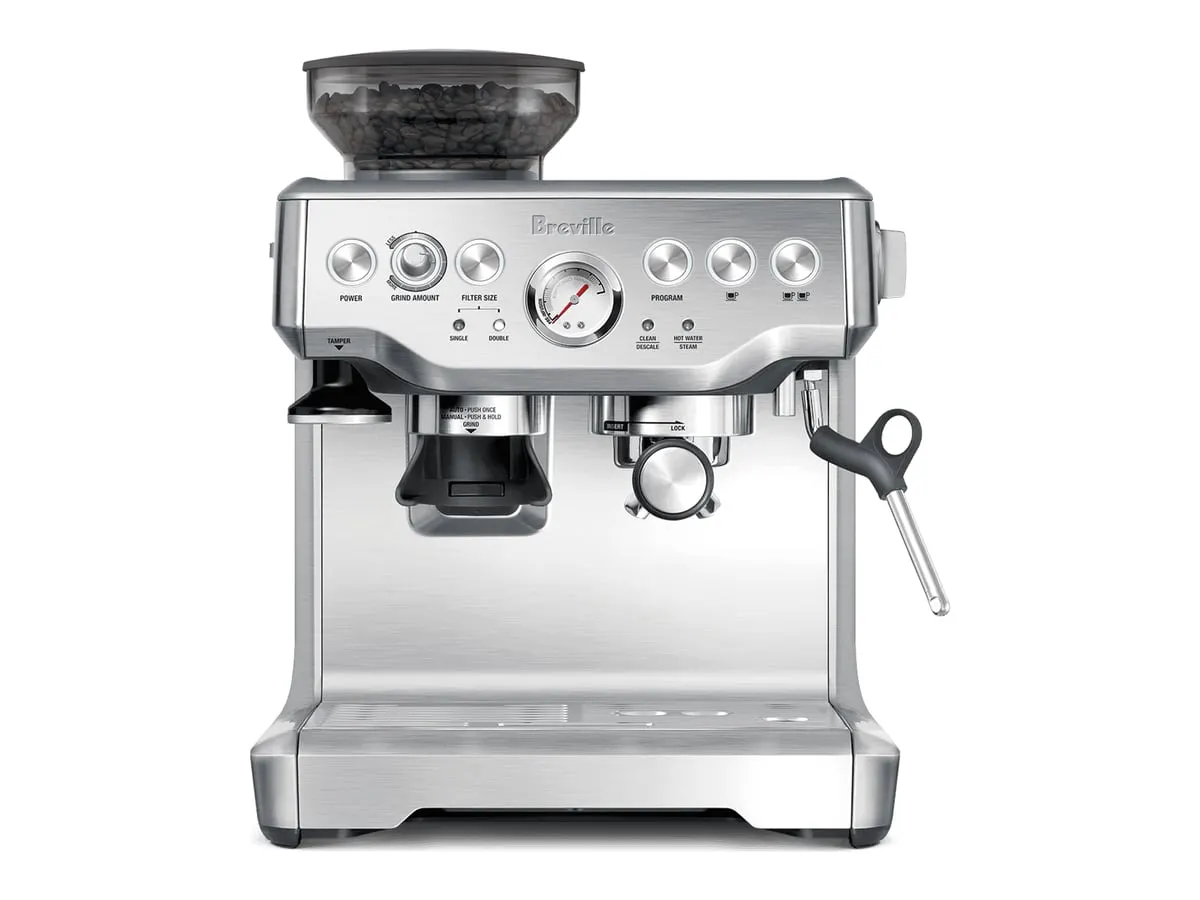
Want one box with a grinder, under $500: the Breville Barista Express — but only at its sale price.
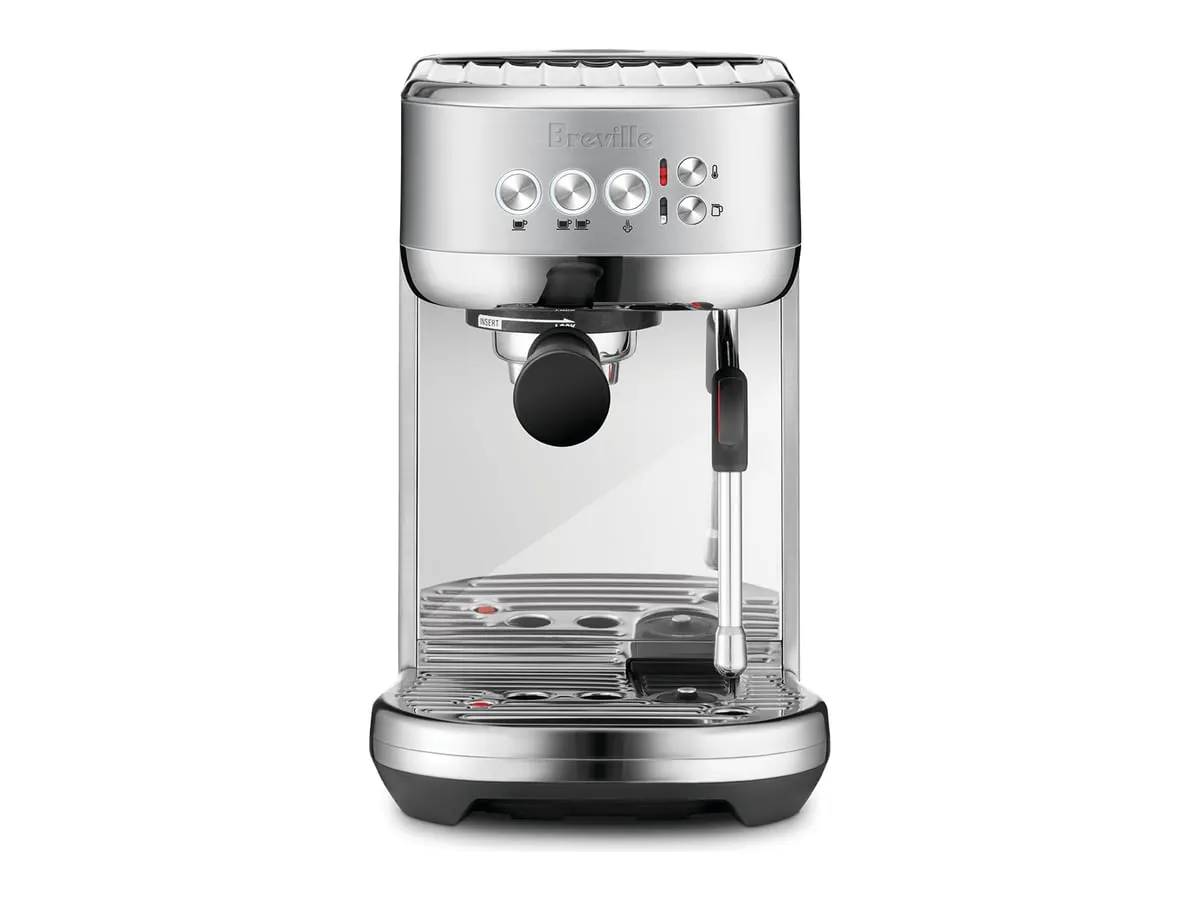
Can stretch to about $500 for the machine: the Breville Bambino Plus, Serious Eats' overall favorite.
Don't want to grind or tamp at all: a capsule machine may be the better budget buy — see espresso vs Nespresso.
Real day-one cost
Serious Eats says getting a fine, consistent grind "will make all the difference," and most drip-coffee burr grinders can't go fine enough. Its value pick for an espresso grinder is the Baratza Encore ESP, which Baratza lists at $199.95. Adding that to each grinder-less machine:
Setup
Machine
Grinder
Day one
De'Longhi Stilosa (EC260BK) Encore ESP added
$149.95
$199.95
$349.90
Breville Bambino (BES450) Encore ESP added
$299.95
$199.95
$499.90
Breville Barista Express (BES870) Built-in grinder (sale price; list $699.95)
$499.95
—
$499.95
Breville Bambino Plus (BES500) Encore ESP added
$499.95
$199.95
$699.90
Prices seen 9 Nov 2026 on the manufacturer pages linked below. Excludes beans, a milk pitcher (Stilosa only — Breville includes a jug), scale, and cleaning supplies. Try your own numbers in the setup cost calculator.
The pattern: a $150 machine plus a real grinder lands within about $150 of a $500 machine that includes one. If you know you'll make espresso most days, the middle of this table is usually the better spend. If you're testing the waters, the Stilosa (or a capsule machine) keeps the downside small.
The picks
Lowest price that's still a real pump espresso machine
Serious Eats calls the Stilosa "the cheapest model we recommend" and is blunt that it "didn't love" it: shots were passable, the steam wand made "bubbly, lumpy milk foam," and the mostly plastic body rattled while brewing. What it does well is simplicity — a single dial for brew or steam. De'Longhi lists a 33.81 oz tank and a 1-year warranty plus a second year with registration.
Stainless steel boiler (De'Longhi); no PID per Serious Eats
Portafilter
Not listed by De'Longhi (Serious Eats lists 54 mm)
Size
13.5 × 8.07 × 11.22 in (L × W × H as published)
Who should skip it: anyone who wants latte-art milk or expects to upgrade within a year. That upgrade money often goes further if you start in the $300–$500 band.
Breville describes the Bambino as the Bambino Plus without the automatic steam wand: the same ThermoJet heating that is ready in about 3 seconds, a 54 mm portafilter dosed at 18 g, and low-pressure pre-infusion before 9-bar extraction. Breville includes single- and dual-wall baskets; dual-wall (pressurized) baskets are more forgiving with pre-ground coffee while you save for a grinder.
Note: the editorial tests we cite reviewed the Bambino Plus, not this model. We list it on Breville's published specs.
Who should skip it: people who want hands-off milk (the Plus automates it), and anyone who won't buy a grinder — without one, you're paying for precision you can't use.
At $499.95 it's the cheapest machine here with a built-in grinder. Testers disagree about it: TechGearLab names it its best overall espresso machine, while Serious Eats says the savings versus the Impress aren't worth it because its grind controls were "unpredictable and imprecise." Our full Barista Express review lays out both.
Serious Eats' overall favorite, recommended for about five years. It credits fast ThermoJet heating, PID at 200°F, pre-infusion, and an automatic steam wand with three temperature and three texture settings that made microfoam "silky enough for latte art." The one gripe: inconsistent volume buttons, so stop shots manually.
ThermoJet (flash heat, ready in ~3 s per Breville); PID per Serious Eats
Portafilter
54 mm
Size
11.9 × 7.4 × 14.3 in (Breville, labeled W×D×H); Serious Eats lists 8 × 13 × 12 in
Who should skip it: anyone who can't add a grinder to the budget — with an Encore ESP it's about $699.90, more than the Barista Express on sale.
What to skip at the bottom of the market
Serious Eats tested several cheap machines and does not recommend them: a steam-powered (not pump) SOWTECH machine pulled bitter shots, and two Mr. Coffee models produced thin espresso and bubbly milk. If a machine under $100 claims café espresso, check whether it uses a pump at all.
Also ignore big "15-bar" or "20-bar" numbers on the box. Serious Eats says a good machine delivers a consistent nine bars at the coffee; the pump rating is a maximum.
FAQ
Can I use pre-ground coffee in a budget machine?
Yes, with pressurized (dual-wall) baskets, which Breville includes with the Bambino models and the Barista Express. Expect decent coffee rather than great espresso: freshly ground beans on a single-wall basket are what the machines are built for.
Is a used or refurbished machine a better budget buy?
It can be, but we haven't researched refurbished programs yet, so we don't make a recommendation. Check what warranty comes with it.