The hard part of espresso isn't the machine; it's getting dose, grind, and tamp right. The best beginner machines take one or more of those off your plate.
Updated 9 Nov 2026. Based on published specs and named reviews (linked below) — how we rate. Prices change; recheck before you buy.
Three ways to start
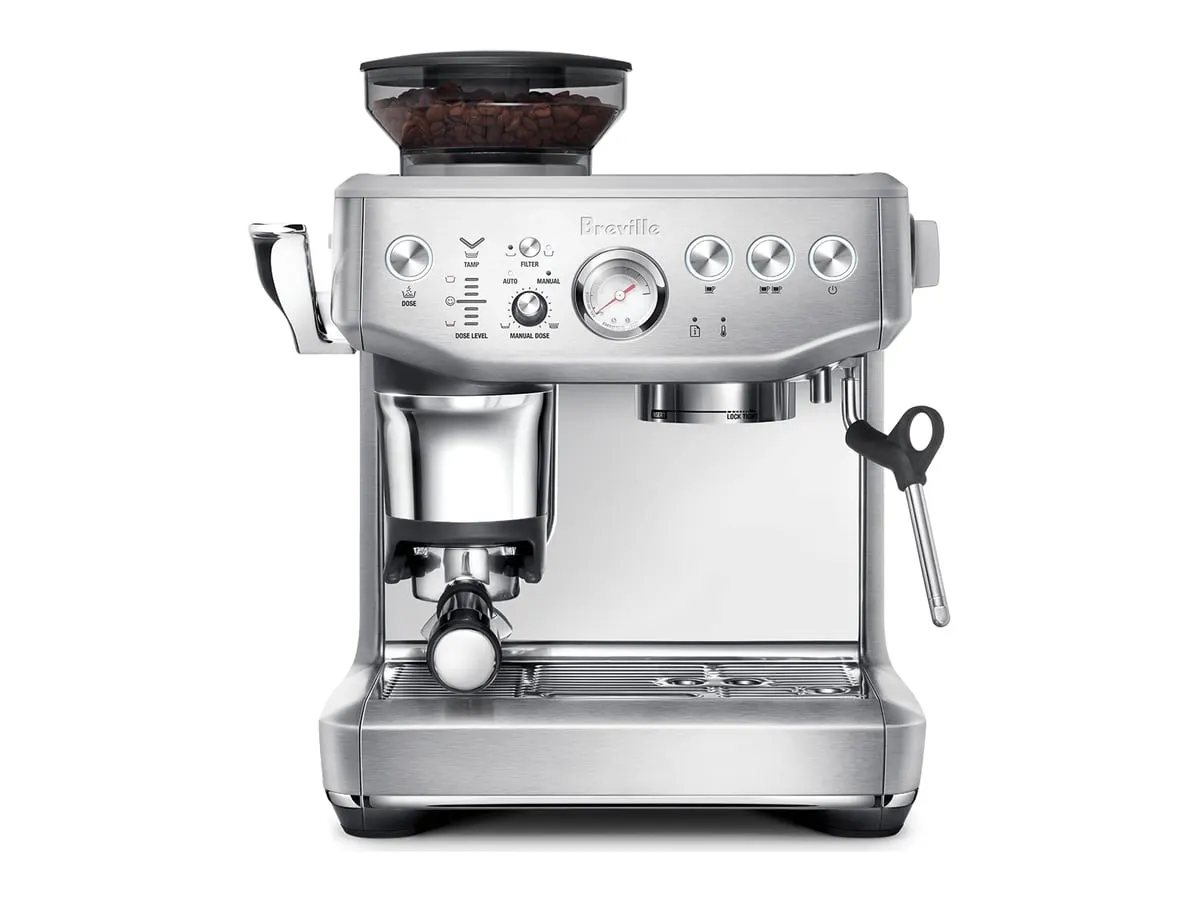
Learn espresso with guard rails:Barista Express Impress — grinder, dose feedback, and assisted tamping in one box.
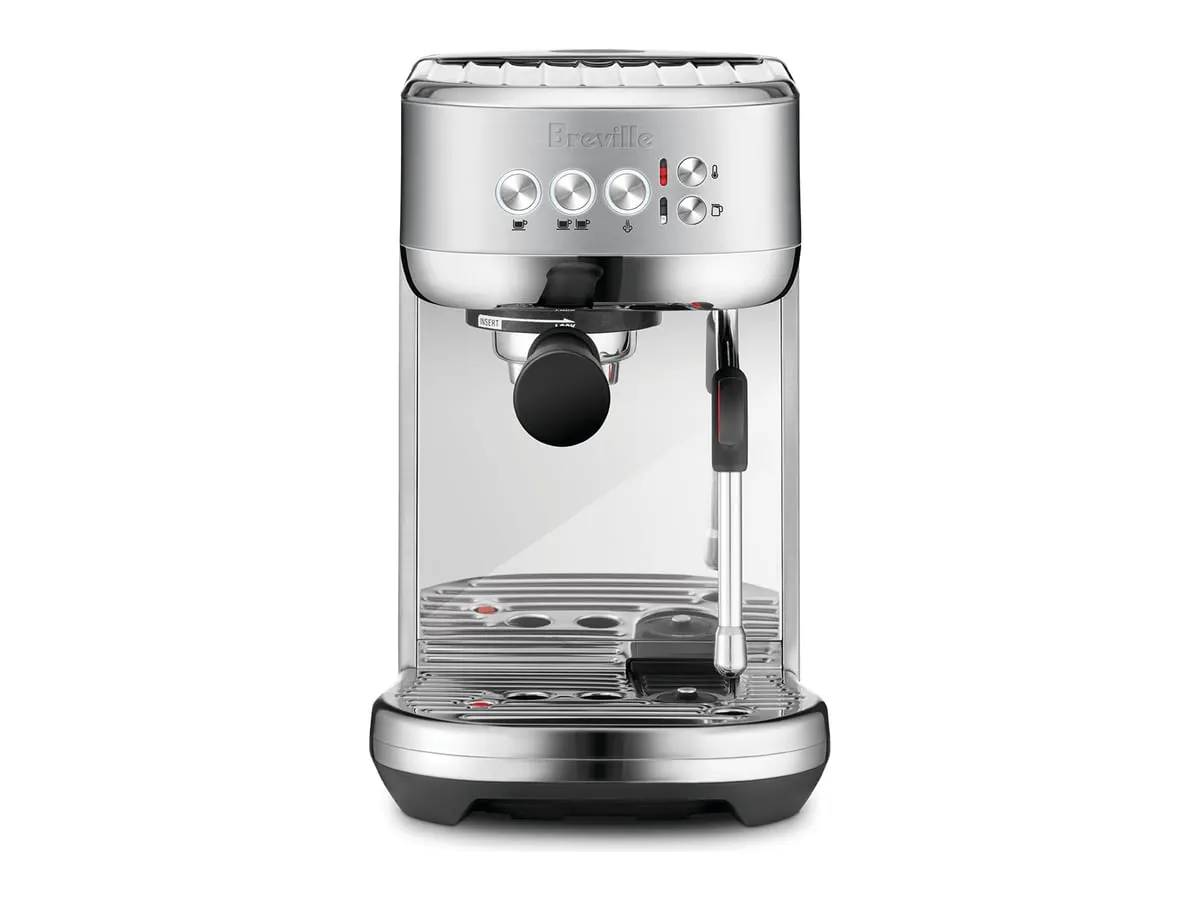
Small machine, automatic milk:Bambino Plus — add a grinder.
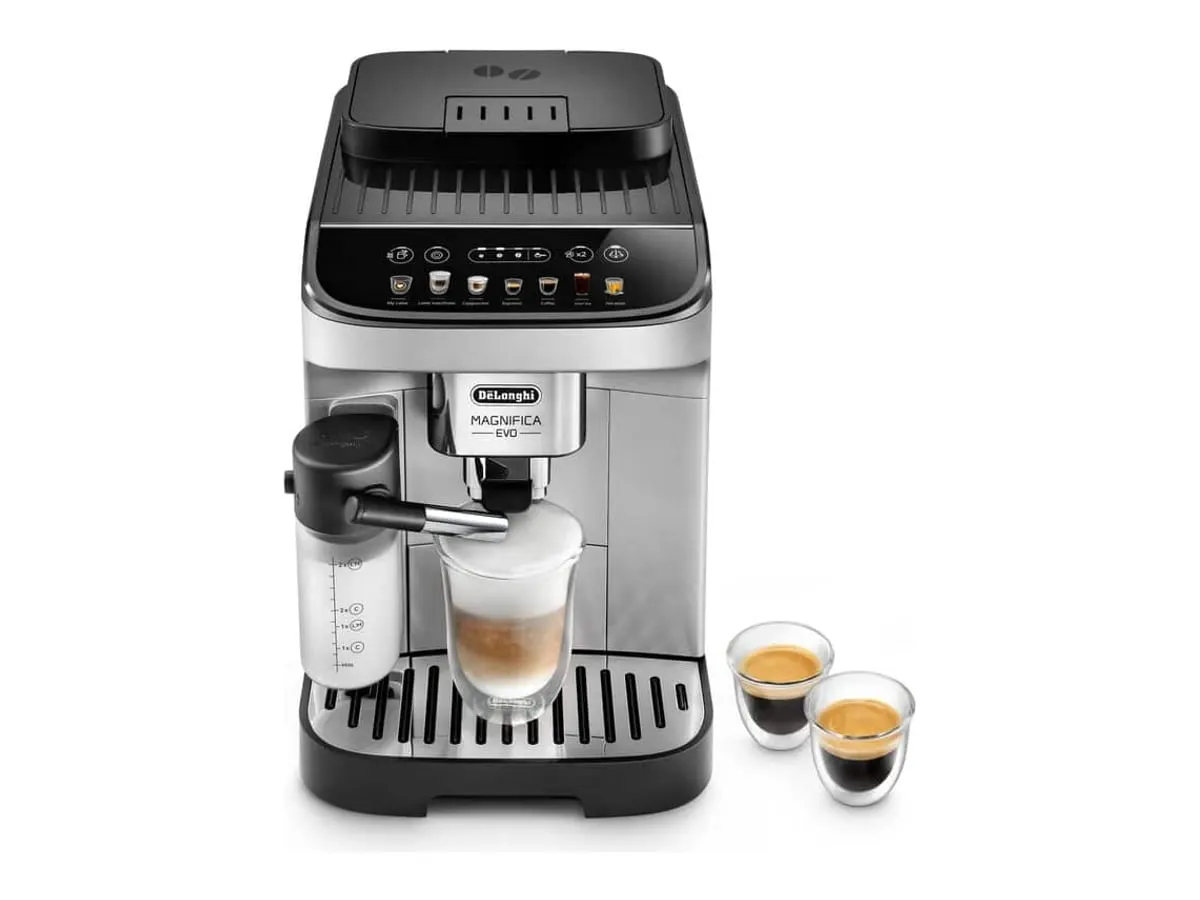
Skip the learning entirely:Magnifica Evo — a super-automatic that grinds, doses, and froths for you.
Serious Eats' best espresso machine for beginners. The built-in tamper tells you if the dose is short or over, and the machine corrects its next grind toward the 18 g target. A senior editor who calls herself someone who "doesn't nerd out about coffee" says it let her "easily and confidently dose." It also heats fast and switches to steam in seconds.
Serious Eats calls it "approachable" for beginners and experts. The automatic steam wand removes the second-hardest skill — milk texturing — with three temperature and three foam settings. You'll still need to grind and tamp, so pair it with an espresso grinder (Serious Eats suggests the Baratza Encore ESP as a less overwhelming option).
If the goal is a latte, not a hobby, a super-automatic does the grinding, dosing, tamping, and milk for you. Food & Wine set the Magnifica Evo up in about 10 minutes and named it its best-value pick. Serious Eats notes super-automatics offer less control, which makes fine-tuning harder.
Not published as boiler/thermoblock on the product page
Portafilter
None (internal brew unit)
Size
9.4 × 17.3 × 14.2 in (L × W × H as published)
Who should skip it: anyone who wants to get better at espresso — there's little to adjust.
What about the cheaper Barista Express?
The original Barista Express is $499.95 on sale. For a beginner, it's the riskier buy: TechGearLab predicts most people feel confident after 20–40 drinks and timed about 4.5 minutes per cappuccino, while Serious Eats says it took "a dozen tries to dial in a decent shot." The Impress exists to remove exactly those steps. Read theBarista Express review before deciding.
What a beginner setup needs besides the machine
A grinder that can grind for espresso — unless the machine has one. Most drip-coffee burr grinders can't go fine enough (Serious Eats).
A milk pitcher — Breville includes one with the Bambino Plus, Barista Express, and Impress; Serious Eats reminds buyers that many other machines don't.
Cleaning detergent — Serious Eats' care notes for most picks say to backflush with coffee detergent per the manufacturer.
Fresh beans — Food & Wine says coffee tastes best within about a month of roasting.
Optional: a better tamper and a precision basket, which Serious Eats recommends as easy upgrades for several machines.
Semi-automatic, automatic, super-automatic — what's the difference?
Per Serious Eats: semi-automatics make you grind, tamp, and start and stop the shot; automatics stop the shot for you by volume; super-automatics grind, tamp, and pull the shot themselves.
Is a beginner machine a waste if I get into espresso?
Not usually. The Impress and Bambino Plus are both machines Serious Eats recommends outright, not just for beginners. The thing you outgrow first is usually a built-in grinder's range.
Should a beginner avoid the Gaggia Classic Pro?
Not necessarily, but it asks more of you: no PID means learning to temperature-surf. Compare in Breville vs Gaggia.