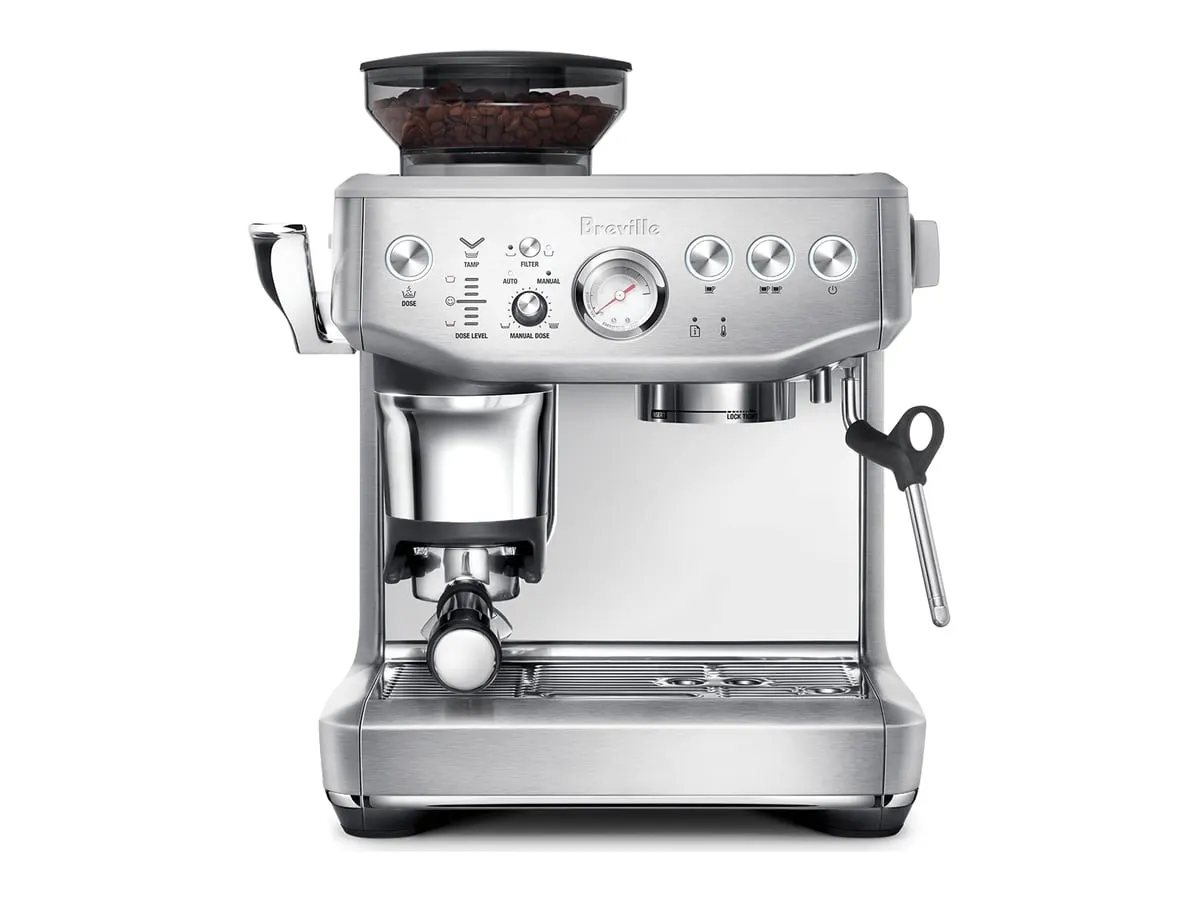
Serious Eats' beginner pick and the easiest grind-to-shot workflow here: the assisted tamping lever reports your dose and the machine self-corrects the next one. Serious Eats wished the 25-setting grinder had more range but said it "did a good job."
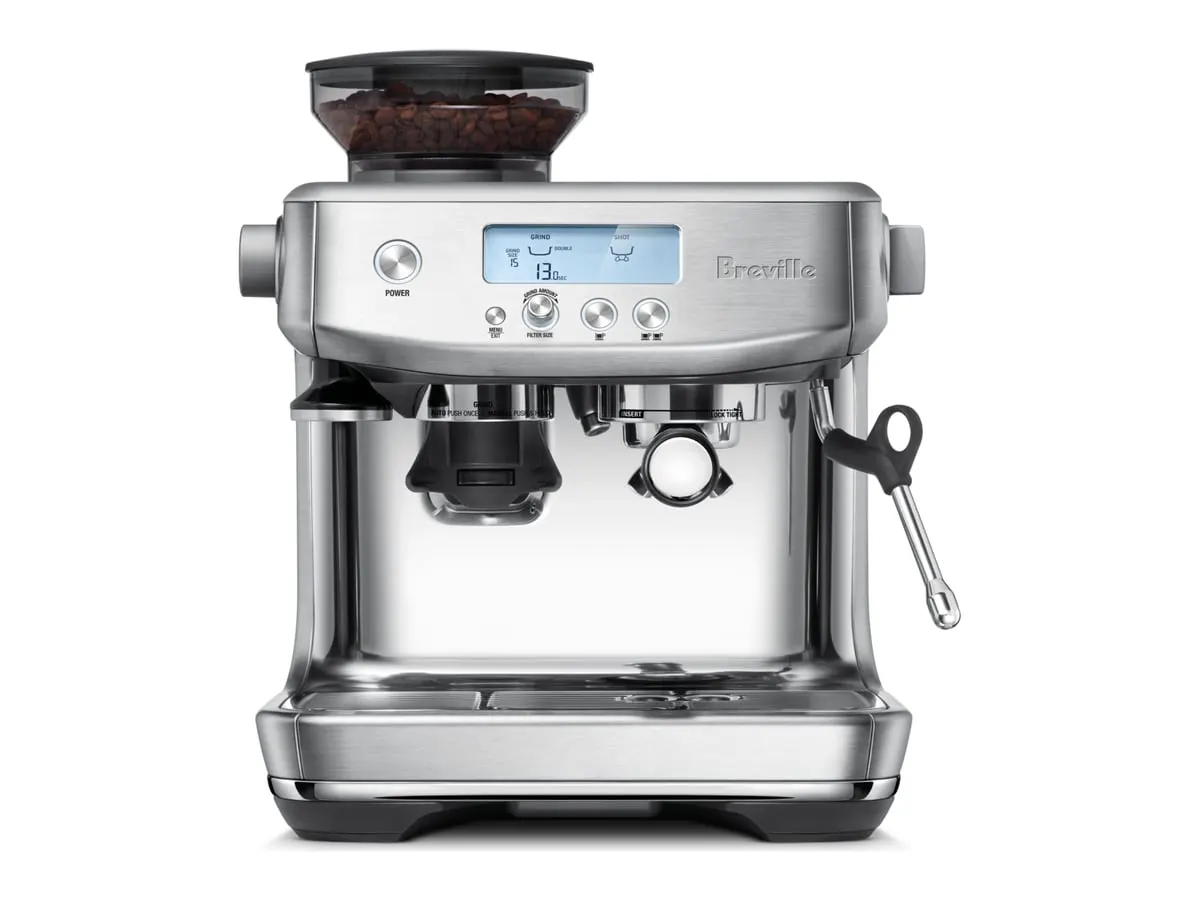
Five more grind settings than the Impress (30), Baratza burrs according to Breville, plus adjustable temperature and pre-infusion. Serious Eats' intermediate pick, with the caveat that serious hobbyists will likely move to a standalone grinder.
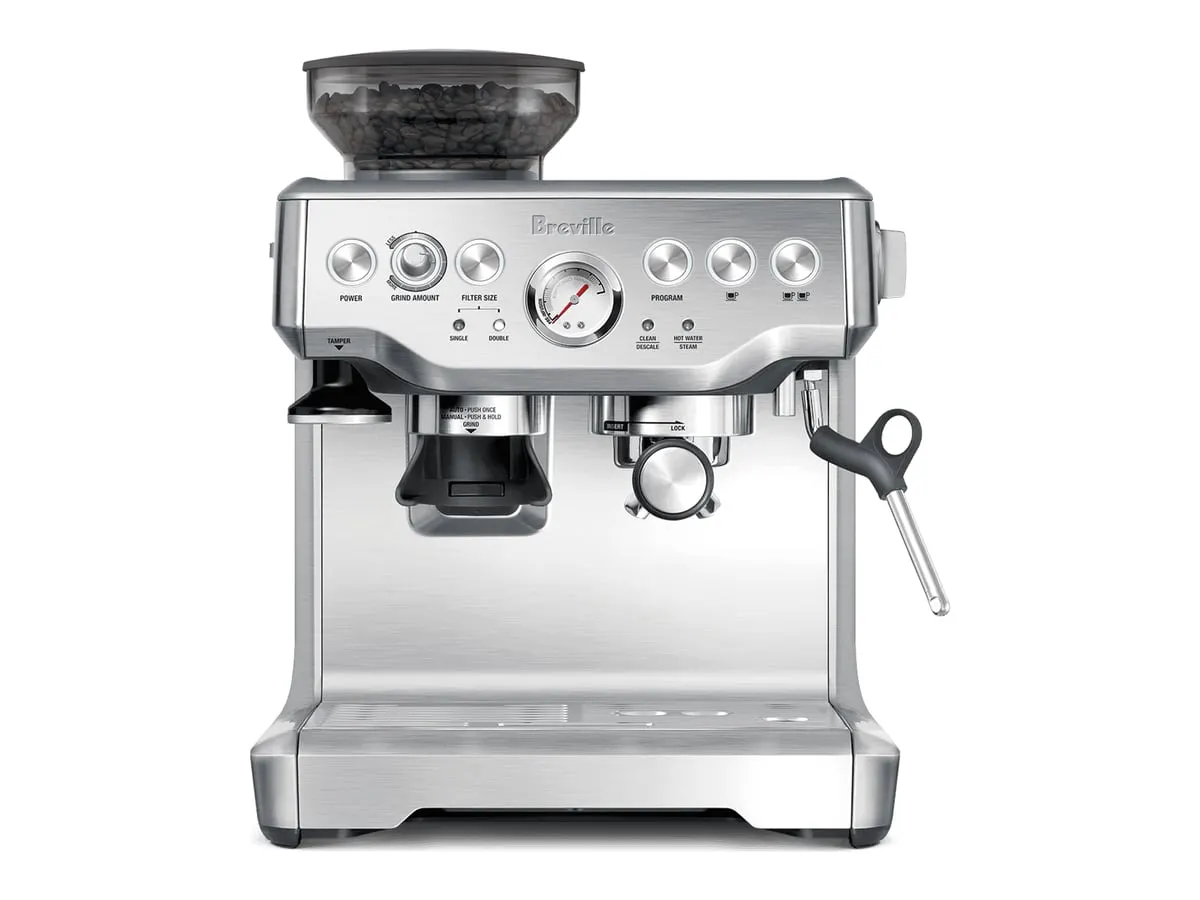
The original: 16 grind settings and manual tamping. TechGearLab's best overall machine; Serious Eats found its grind controls imprecise and recommends the Impress instead. See the full review.
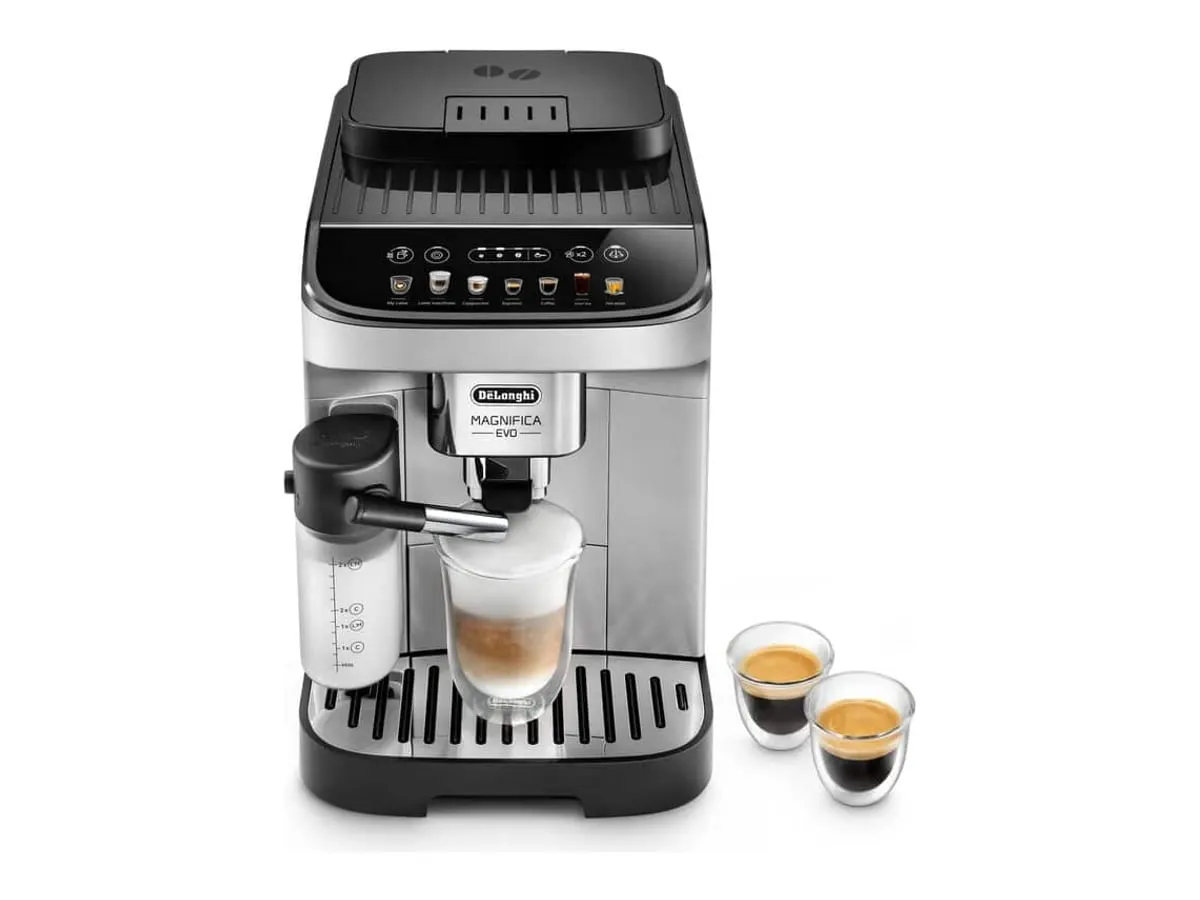
A super-automatic with a 13-setting grinder built into the hopper. Food & Wine's best-value super-automatic. It grinds and doses for you, so there's nothing to tamp.
Not published as boiler/thermoblock on the product page
Portafilter
None (internal brew unit)
Size
9.4 × 17.3 × 14.2 in (L × W × H as published)
Who should skip it: people who want to control the shot.
Built-in or separate grinder?
Built-in wins on price, footprint, and simplicity. One machine to clean, one plug.
Separate wins on range. Serious Eats found built-in grinders' range "more limiting" than a standalone grinder — a finite number of steps to improve a shot.
Separate also survives a machine upgrade. A good grinder can outlast two machines.
Higher up, Serious Eats also recommends built-in-grinder machines it tested at around $1,700–$3,000: the Meraki (integrated scale, 45 grind settings), the Breville Oracle Jet, and the Oracle Dual Boiler. Avoid De'Longhi's La Specialista Arte, whose grinder Serious Eats says lacked the fine settings needed for great espresso.